

Scale changes more than shelf space. A 1:64 model is about one sixty-fourth of the real car’s length; a 1:24 model is about one twenty-fourth. The larger format gives designers more room for visible interior, wheels and body details, while smaller cars are easier to store as a series.
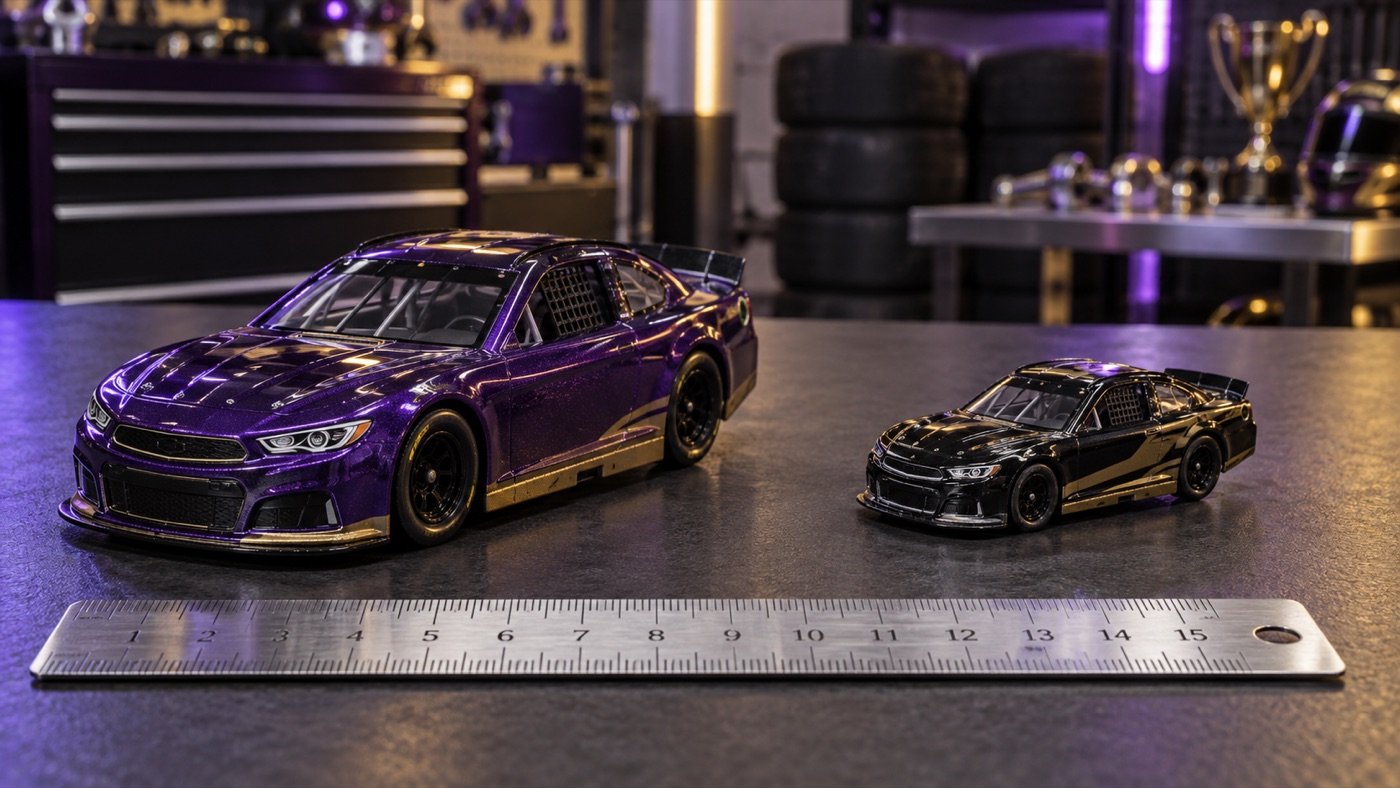
Start with the space you have
Measure the shelf or display case before choosing a scale. A group of 1:64 cars can tell a season-by-season story in a compact area. A 1:24 car works well as a focal piece, but packaging and a protective case need additional room.
Compare the listing, not just the number
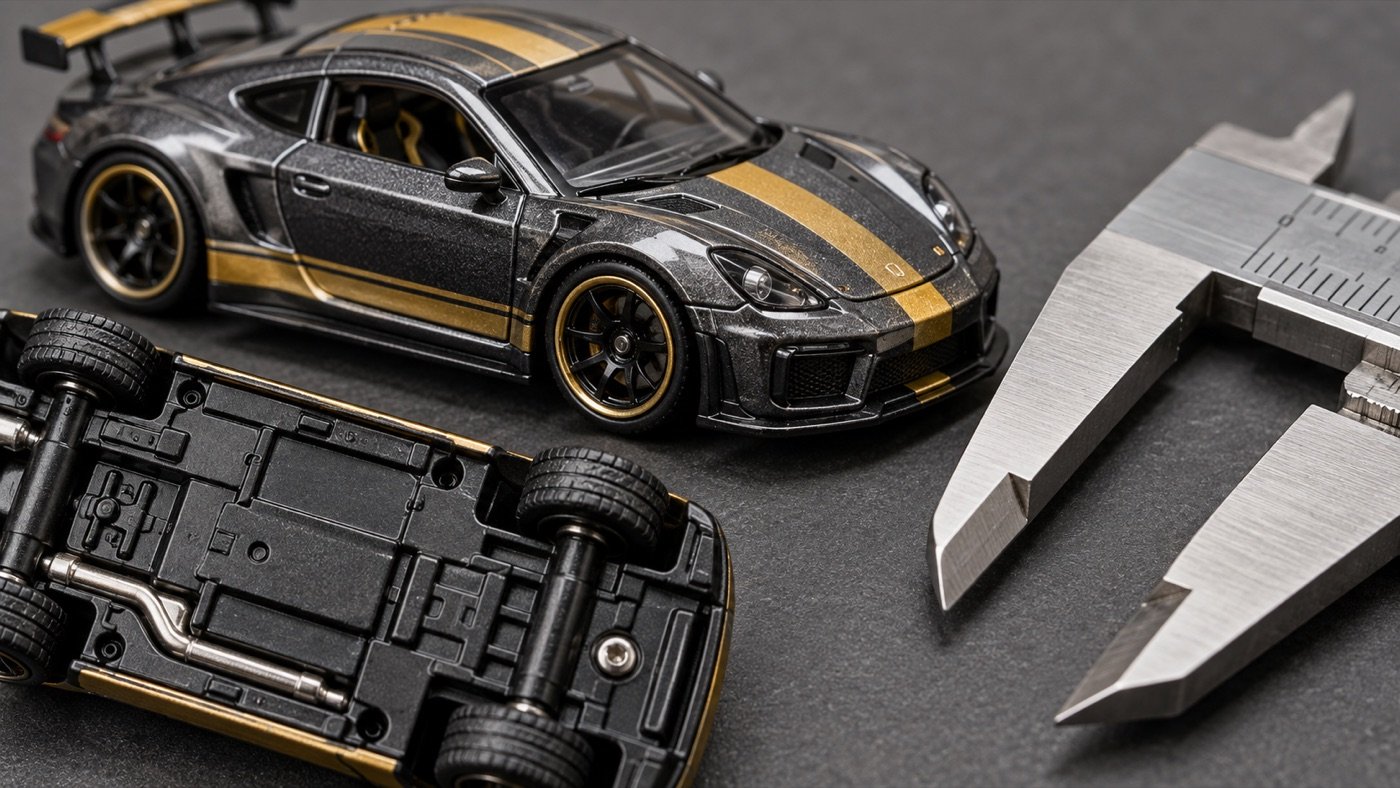
Check the exact model name, scale, dimensions and included parts on the Amazon listing. Photos can hide size differences. If a seller lists only “die-cast,” ask for measurements before treating it as a specific scale.
Two relevant examples
For a compact NASCAR theme, see the 1999 Ernie Irvan model. The 1996 Terry Labonte model offers another car to compare by listing details. Verify each seller’s stated scale and condition before ordering.